5 Best Metabolism Trackers of 2026 (Ranked by Expert Testing)
Key Takeaways
- Lumen ranks #1 for non-invasive, at-home fat oxidation tracking — best for weight loss and metabolic flexibility improvement.
- CGM (FreeStyle Libre 3) ranks #2 for blood glucose monitoring — best for metabolic health with a focus on glucose and insulin response.
- PNOĒ ranks #3 for clinical precision — best for athletes and serious biohackers who want full VO2max and RMR testing.
- Most people focused on weight loss and everyday metabolic optimization will get the most value from Lumen.
- The right tracker depends entirely on your goal — there's no single "best" for every person.
There are now dozens of devices claiming to help you track and optimize your metabolism. From breath analyzers to skin sensors to lab-grade metabolic carts, the options span a huge range of technology, invasiveness, cost, and accuracy. After testing and researching these tools extensively, here are the five that stand out — and the honest assessment of who each one is best for.
How We Ranked These Devices
Each device was evaluated across six criteria: scientific validity, accuracy, accessibility (non-invasive preference), cost (upfront and ongoing), actionability of data, and user experience. For each criterion, we weighted toward everyday consumers focused on weight loss and metabolic health — not athletes or clinical patients, unless otherwise noted.
Lumen Metabolism Tracker
Best For: Non-invasive daily fat-burning measurement and metabolic flexibility improvement
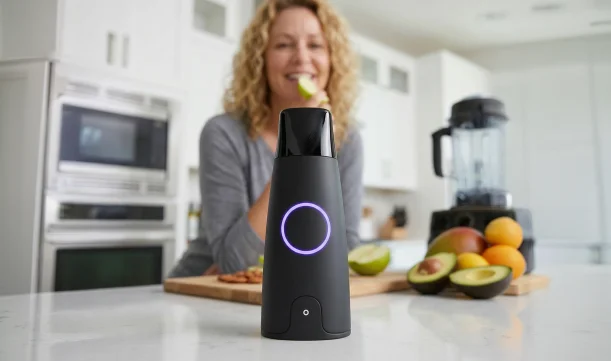
Lumen measures your Respiratory Quotient (RQ) via a calibrated CO₂ breath test. You breathe in deeply, hold for 10 seconds, and exhale into the device. In under a minute, you receive a score from 1 (fat burning) to 5 (carb burning). The paired app interprets the score, tracks trends over weeks and months, and provides personalized daily nutrition recommendations based on your metabolic state.
What makes Lumen uniquely valuable for weight loss is that it measures the output of your metabolism directly — not a proxy like weight, steps, or calories. A peer-reviewed study validated the Lumen RQ measurement against lab-grade indirect calorimetry, finding strong correlation. Over 350,000 users, clinical data shows average improvements of 30% in metabolic flexibility scores over 12 weeks of use.
Pros
- Non-invasive — no needles, no sensors, no wear
- Clinically validated RQ measurement
- Personalized daily nutrition recommendations
- One device purchase (no consumables)
- Trending data shows actual metabolic improvement over time
- Accessible without a prescription
Cons
- Spot measurement only — not continuous like CGM
- Requires consistent morning fasted measurement for best data
- Annual app subscription after year 1 (~$99–$199)
- Not a medical device for clinical glucose management
Price: $199.99–$369.99 depending on plan. Read our full Lumen review →
Abbott FreeStyle Libre 3 (CGM)
Best For: Continuous blood glucose monitoring and glucose response optimization
The FreeStyle Libre 3 is a coin-sized sensor applied to the upper arm that continuously measures interstitial blood glucose every minute for up to 14 days. It's the most widely used consumer-accessible CGM and provides real-time visibility into how specific foods, exercise, sleep, and stress affect your blood sugar.
For metabolic health optimization, CGM data is most useful for identifying specific foods that cause glucose spikes — allowing precise dietary adjustments. However, CGM does not tell you whether you're in fat-burning mode. It tells you about glucose processing, not fuel substrate oxidation. For people with prediabetes or those managing insulin resistance, CGM provides critical data that Lumen cannot.
Pros
- Continuous 24/7 glucose visibility
- Identifies specific food glucose responses in real time
- FDA-cleared for diabetes management
- Minimal daily interaction required
- Excellent app and data ecosystem
Cons
- Invasive — sensor inserted under skin
- Ongoing sensor cost (~$50–$100/sensor, every 14 days)
- Requires prescription for medical CGM in many regions
- Does not measure fat oxidation or metabolic flexibility
- Sensor can fail or dislodge
Price: ~$50–$100 per sensor (plus reader/phone). Prescription may reduce cost with insurance.
For a detailed comparison, see Lumen vs CGM: which tracker is right for you →
PNOĒ Metabolic Analyzer
Best For: Athletes and serious biohackers wanting clinical-precision VO2max and RMR testing
PNOĒ is a portable metabolic analyzer that measures VO2max, resting metabolic rate (RMR), and the crossover point between fat and carb oxidation at different exercise intensities. It's used by elite coaches and sports performance facilities, and unlike Lumen or CGM, it provides a full metabolic profile in a single clinical session.
The key limitation for everyday users is practicality: PNOĒ requires a trained operator and is typically used for one-time or quarterly assessments — not daily tracking. It's the right tool for serious athletes who want precise Zone 2 thresholds and maximum fat oxidation data for training program design.
Pros
- Clinical-precision VO2max and RMR measurement
- Full fat-vs-carb oxidation curve across exercise intensities
- Gold-standard metabolic profile in one session
- Useful for Zone 2 training threshold determination
Cons
- High upfront cost ($700–$1,000+)
- Requires operator/facility — not home-use
- Not designed for daily tracking
- No ongoing metabolic flexibility monitoring
Price: $700–$1,000+ for device; typically sold to clinics. Sessions via a facility: $100–$300/session.
LEVL Breath Ketone Monitor
Best For: Ketosis tracking on a low-carb or ketogenic diet
LEVL measures acetone in the breath — a byproduct of fat metabolism — as a proxy for ketosis depth. Unlike Lumen (which measures CO₂/RQ), LEVL specifically detects whether you're in ketosis, making it most useful for people following ketogenic or low-carb protocols who want to verify and optimize their ketogenic state.
The key limitation is specificity: LEVL tells you whether you're in ketosis, but not your overall fat oxidation rate or metabolic flexibility. A person not on a ketogenic diet will get limited value from acetone monitoring compared to RQ-based measurement.
Pros
- Non-invasive breath test
- Best-in-class for ketosis verification
- No disposables after initial purchase
- Daily tracking capability
Cons
- Only useful for keto/low-carb dieters
- Does not measure metabolic flexibility or RQ
- Narrower use case than Lumen
- Limited nutrition guidance compared to Lumen
Price: ~$300–$500 device + subscription.
InBody 570 Body Composition Analyzer
Best For: Tracking body fat vs. muscle mass changes over time
The InBody 570 uses bioelectrical impedance analysis (BIA) to measure lean muscle mass, body fat percentage, visceral fat, and intracellular vs. extracellular water distribution. It's not technically a "metabolism tracker" in the fuel-measurement sense — it doesn't tell you what you're burning — but it provides the most detailed body composition picture available outside of DEXA scanning.
For weight loss tracking, InBody is valuable for confirming whether you're losing fat specifically rather than muscle — a key question when the scale stalls or misleads. It's available in many gyms and clinics for $20–$50 per session, making it an accessible complement to a daily tracker like Lumen.
Pros
- Detailed body composition: fat, muscle, visceral fat, water
- Widely available in gyms and clinics
- Validates whether fat loss is occurring vs. muscle loss
- Fast 60-second test
Cons
- Does not measure metabolic state or fuel burning
- Home unit is expensive ($3,000–$5,000)
- Hydration status affects accuracy
- Snapshot, not continuous data
Price: Per-session at gym/clinic: $20–$50. Home unit: $3,000–$5,000.
Final Comparison Table
| Device | Measures | Invasive? | Daily Use? | Best For | Cost |
|---|---|---|---|---|---|
| Lumen | Respiratory Quotient (RQ) | No | Yes | Weight loss, metabolic flexibility | $200–$370 upfront |
| CGM (Libre 3) | Blood glucose (24/7) | Yes | Yes | Glucose management, prediabetes | $50–$100/sensor |
| PNOĒ | VO2max, RMR, fat/carb curve | No | No (sessions) | Elite athletes, clinical assessment | $700–$1,000+ |
| LEVL | Breath acetone (ketosis) | No | Yes | Keto dieters | $300–$500 |
| InBody 570 | Body composition | No | No (sessions) | Fat vs. muscle tracking | $20–$50/session |
Our Recommendation
For most people focused on weight loss and everyday metabolic health, Lumen provides the most directly actionable data in the most accessible package. It's non-invasive, clinically validated, designed for daily use, and gives you visibility into the exact metabolic metric most relevant to fat burning. Over 350,000 users and 12 weeks of testing supported our conclusion.
If you're managing blood glucose for medical reasons, add a CGM. If you're a serious athlete, consider PNOĒ for a quarterly performance assessment. For most everyone else, Lumen is the best starting point.

The #1 Ranked Metabolism Tracker
Lumen's daily breath test gives you real-time fat vs. carb burning data with no needles, no sensors, and no prescription required.
Get Lumen — See Today's Price →Sources & Citations
- Lumen Clinical Validation Study. PubMed PMID 34963209.
- Goodpaster BH, Sparks LM. "Metabolic Flexibility in Health and Disease." PubMed PMID 28467930.